December 16, 2025
E-Commerce Fraud Trends in India 2025: What Shoppers & Brands Must Know
tanishka-ratn
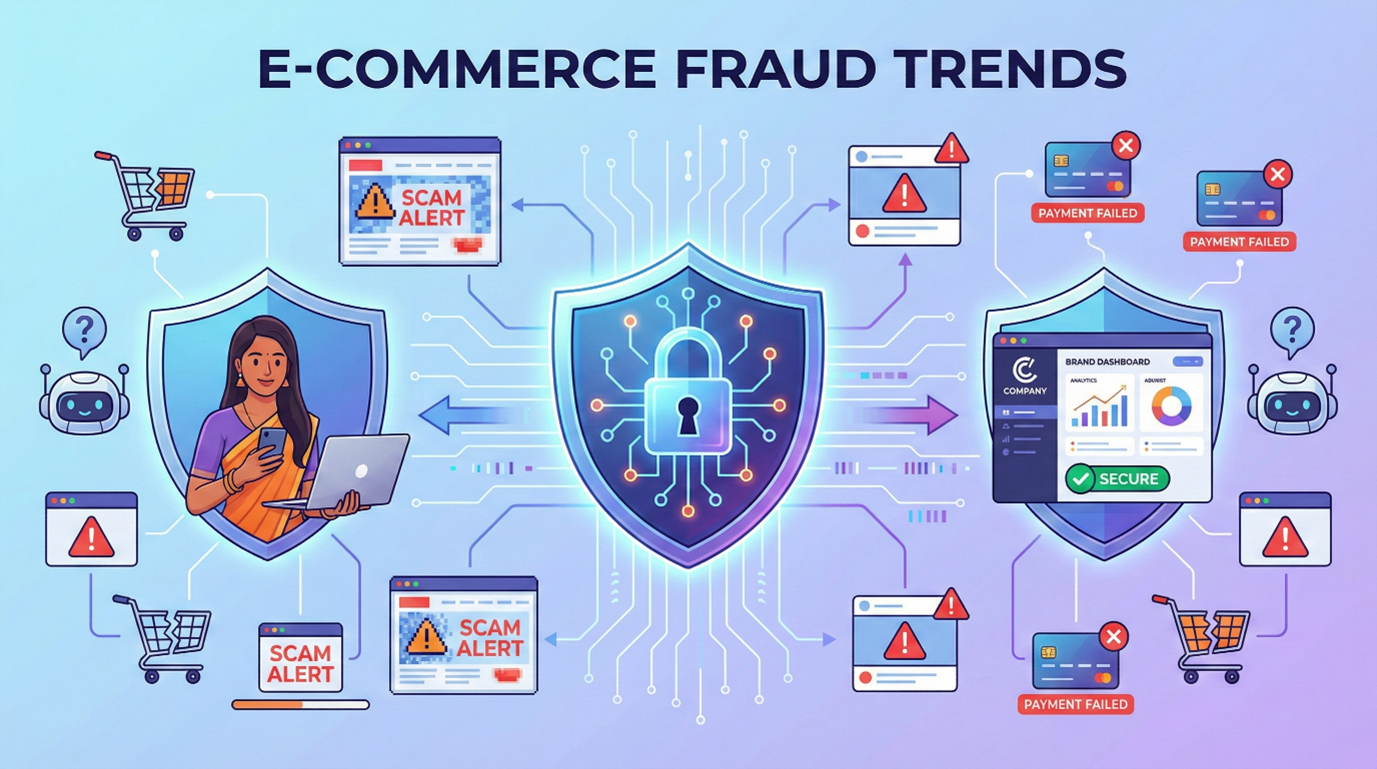
India’s e-commerce ecosystem is growing faster than ever. More users, more platforms, more digital payments - but along with growth comes a serious challenge: e-commerce fraud.
In 2025, online fraud will no longer be limited to fake websites or basic scams. Fraudsters are using advanced techniques, automation, and AI to exploit both shoppers and brands.
This blog covers:
- Major e-commerce fraud trends in India (2025)
- How these frauds impact shoppers and businesses
- Why fraud is becoming harder to detect
- Best prevention practices
- How ScanMonk helps create trust in online shopping
The Rising Scale of E-Commerce Fraud in India
With millions of Indians shopping online every day, fraudsters see huge opportunity.
Key reasons fraud is increasing:
- Rapid digital adoption
- Growing social commerce
- High festive sale traffic
- Low verification before purchase
- Easy creation of fake online stores
Fraud has evolved from isolated scams to organized, scalable operations.
Top E-Commerce Fraud Trends in 2025
1. Fake & Clone Shopping Websites
One of the biggest fraud trends is the rise of:
- Clone websites of popular brands
- Lookalike domains with minor spelling changes
- Temporary stores created only for sale seasons
These sites vanish once enough payments are collected.
2. Social Media Commerce Fraud
Fraud is shifting from websites to platforms like:
Scam stores:
- Run paid ads
- Show attractive reels
- Disable comments
- Disappear after a few weeks
Many shoppers trust social platforms without verification.
3. Payment Fraud & Fake Refunds
Common payment-related frauds include:
- Fake refund messages
- Fraudulent payment links
- Fake order issue notifications
These scams aim to steal:
- Card details
- UPI access
- OTPs
4. AI & Automation-Based Fraud
In 2025, fraudsters are using:
- AI-generated websites
- Automated chatbots
- Personalized scam messaging
- Fake reviews at scale
This makes fraud harder to detect using traditional methods.
5. Return & Chargeback Fraud
This impacts brands more than shoppers.
Examples:
- Fake return claims
- Used or damaged items returned
- False chargeback requests
This leads to revenue loss and higher prices for genuine buyers.
Impact of E-Commerce Fraud
Impact on Shoppers
- Financial loss
- Data theft
- Identity misuse
- Loss of trust in online shopping
Impact on Brands
- Revenue leakage
- Increased operational costs
- Higher chargebacks
- Brand reputation damage
Fraud affects the entire ecosystem, not just individuals.
Why Fraud Detection Is Getting Harder
Traditional fraud signals are no longer reliable:
- Good design no longer means safe
- Professional language no longer means genuine
- Fast customer support no longer means real
Fraudsters now focus on trust illusion, not obvious mistakes.
Best Practices to Prevent E-Commerce Fraud
For Shoppers
- Verify unknown websites
- Avoid impulse purchases
- Don’t trust ads blindly
- Never share OTPs
- Use trusted verification tools
For Brands
- Improve transparency
- Build trust signals
- Monitor fraudulent activity
- Educate customers
- Partner with trust-verification platforms
Trust is no longer optional — it’s a business requirement.
How ScanMonk Strengthens Trust in E-Commerce
ScanMonk works as a trust layer between shoppers and online stores.
It helps:
- Shoppers verify websites before buying
- Reduce scam-related losses
- Improve consumer confidence
- Support safer e-commerce decisions
In a high-fraud environment, trust becomes a competitive advantage.
The Future of E-Commerce Depends on Trust
As fraud continues to evolve, the future of online shopping depends on:
- Awareness
- Verification
- Transparency
Platforms that help users verify before they buy will shape a safer digital marketplace.
Final Thoughts
E-commerce fraud in 2025 is smarter, faster, and more organized than ever.
The solution is not to stop shopping online — it’s to shop with awareness and verification.
Before placing an order on any unfamiliar platform:
Check, verify, and then buy — with ScanMonk.