December 16, 2025
Online Shopping Scams in India: Red Flags & Safety Checklist (2025 Buyer’s Guide)
tanishka-ratn
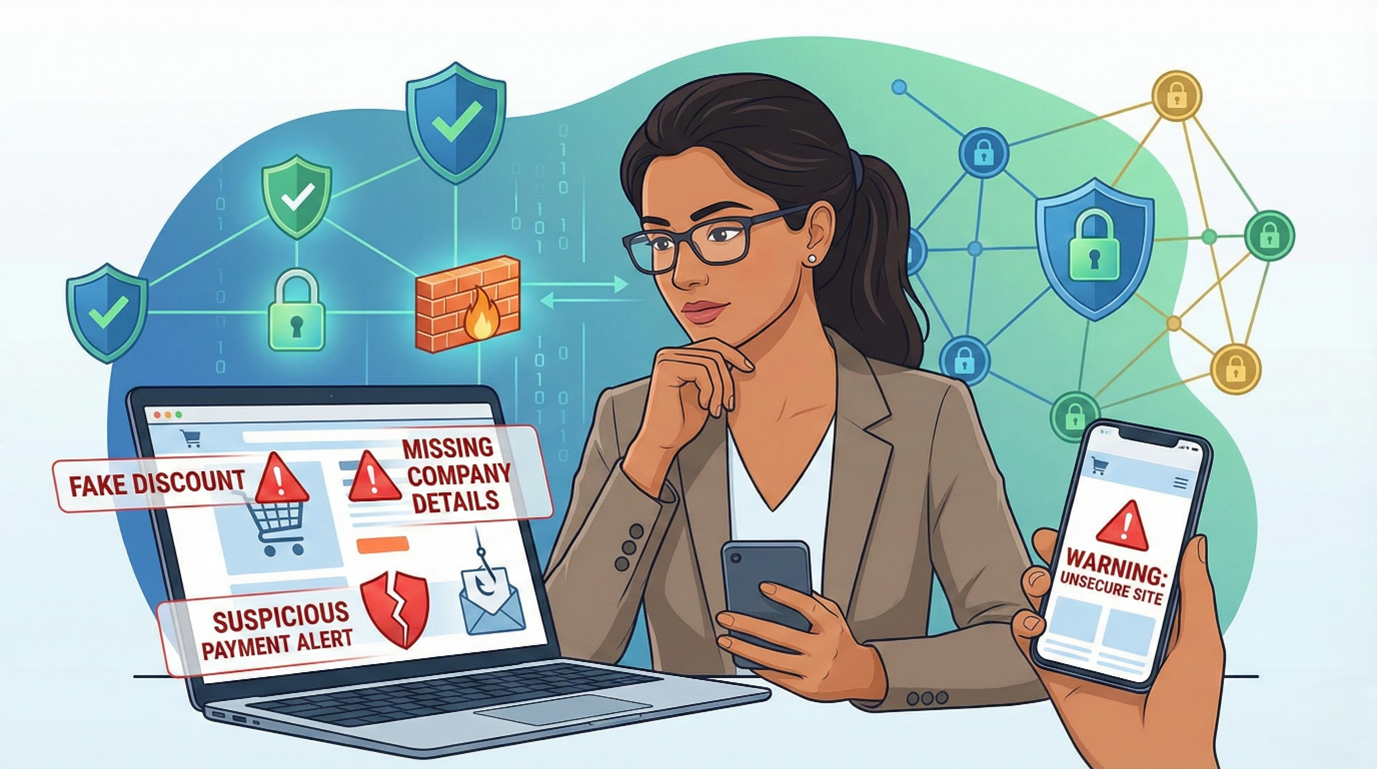
Online shopping is no longer occasional in India - it’s part of everyday life. From clothes and electronics to groceries and gifts, we’re constantly shopping online, staying always online, and trusting websites with our money and data.
But in 2025, online shopping scams in India have become more frequent, more polished, and more dangerous. Fake shopping websites, phishing pages, and scam stores now look professional enough to fool even careful buyers.
Most people who lose money to online fraud aren’t careless. They simply don’t know what warning signs to look for - or how to check website safety before paying.
This guide will help you understand:
- The most common red flags of scam shopping websites
- A simple, practical safety checklist before buying online
- How to reduce fraud risk during sales
- How ScanMonk helps you verify website legitimacy before payment
Why Most Online Shopping Scams Succeed
Contrary to popular belief, scammers don’t break systems - they exploit human behaviour.
Most website scams succeed because of:
- Excitement around heavy discounts
- Fear of missing out during sales
- Urgency and time pressure
- Trust in design and visuals instead of verification
When people skip basic online security and cyber safety checks, scams work effortlessly.
Top Red Flags of Online Shopping Scams (2025)
1. Unrealistic Discounts Across the Website
If a website is offering:
- 70–90% off on branded products
- Massive discounts on every category
- Prices far below market value
That’s not a deal - it’s a security threat. Genuine brands don’t burn margins across all products. This is one of the oldest yet most effective online fraud tactics.
2. No Proper Company or Business Information
Legitimate websites clearly mention:
- Company name and address
- GST details
- Contact information beyond just WhatsApp
Scam websites usually hide or fake this information. If you don’t know who you’re paying, stop immediately. This is a basic information security and data security check.
3. Newly Created or Suspicious Website Domains
Many scam websites:
- Are created days or weeks before major sales
- Use strange or copied domain names
- Closely imitate popular brand URLs
New websites aren’t always scams - but new website + extreme discounts is a high-risk combination. Always check the site before buying.
4. Missing or Fake Return & Refund Policies
Legitimate online stores clearly define:
- Return conditions
- Refund timelines
- Customer support processes
Scam sites either:
- Have no policy at all
- Use vague, copied content
- Refuse returns completely
This is one of the strongest red flags when checking website legitimacy.
5. Only Prepaid Payment Options
Be cautious if a website:
- Doesn’t offer Cash on Delivery
- Pushes prepaid payments aggressively
- Gives “extra discount” only for prepaid orders
Scammers prefer prepaid payments because once money is gone, recovery is difficult. This is a classic online fraud pattern.
6. Fake or No Customer Reviews Anywhere Online
Watch out for:
- No reviews outside the website
- Only generic 5-star reviews
- Reviews copied from other platforms
Always search the brand name with terms like review, scam, or fraud. This simple step improves online security awareness instantly.
7. Poor Website Content & Quality
Even in 2025, many scam websites still show:
- Awkward or broken sentences
- Copied product descriptions
- Broken links or incomplete pages
Professional brands invest in content quality. Scammers don’t. This is still a reliable web security signal.
A Simple Safety Checklist Before Buying from Any New Website
Before placing an order, pause and ask:
- Is the discount realistic?
- Does the website show real company details?
- Are reviews available outside the site?
- Is the domain name genuine?
- Is there a clear return and refund policy?
- Are payment options safe and transparent?
If even one answer feels uncertain, don’t rush. Website safety checks matter more than speed.
Why Manual Checking Isn’t Always Enough
Manually checking everything:
- Takes time
- Can miss hidden scam signals
- Is confusing for first-time shoppers
That’s why relying only on instinct is risky in today’s scam-heavy online environment. Modern fraud requires smarter verification, not guesswork.
How ScanMonk Helps You Verify Website Legitimacy
ScanMonk is built as a website legitimacy checking portal to simplify trust decisions.
With ScanMonk, you can:
- Check whether a website is legitimate or suspicious
- Identify potential scam and fraud risks
- Avoid fake shopping websites
- Make confident, informed buying decisions
Instead of guessing whether a website is safe, verify first with ScanMonk.
Common Mistakes Shoppers Still Make
Many scam victims later realise they:
- Trusted discounts blindly
- Skipped verification due to urgency
- Believed social media ads without research
- Didn’t check website authenticity
Awareness is the first step toward online fraud prevention.
Best Practices for Safe Online Shopping in 2025
- Never shop in a hurry
- Avoid clicking unknown links
- Don’t share OTPs or payment details
- Use trusted payment methods
- Verify unfamiliar websites using ScanMonk
A few extra minutes can save money, data, and peace of mind.
Final Thoughts
Online shopping is safe - when done smartly.
Scammers don’t succeed because shoppers are careless. They succeed because verification is skipped. In 2025, every online shopper needs to prioritise website safety, cyber security awareness, and legitimacy checks.
Before your next purchase, remember:
If you haven’t verified the website, you haven’t shopped safely.
Make ScanMonk your default step - not an afterthought.