May 4, 2026
What Is NPS and How Should D2C Brands in India Use It?
tanishka-ratn
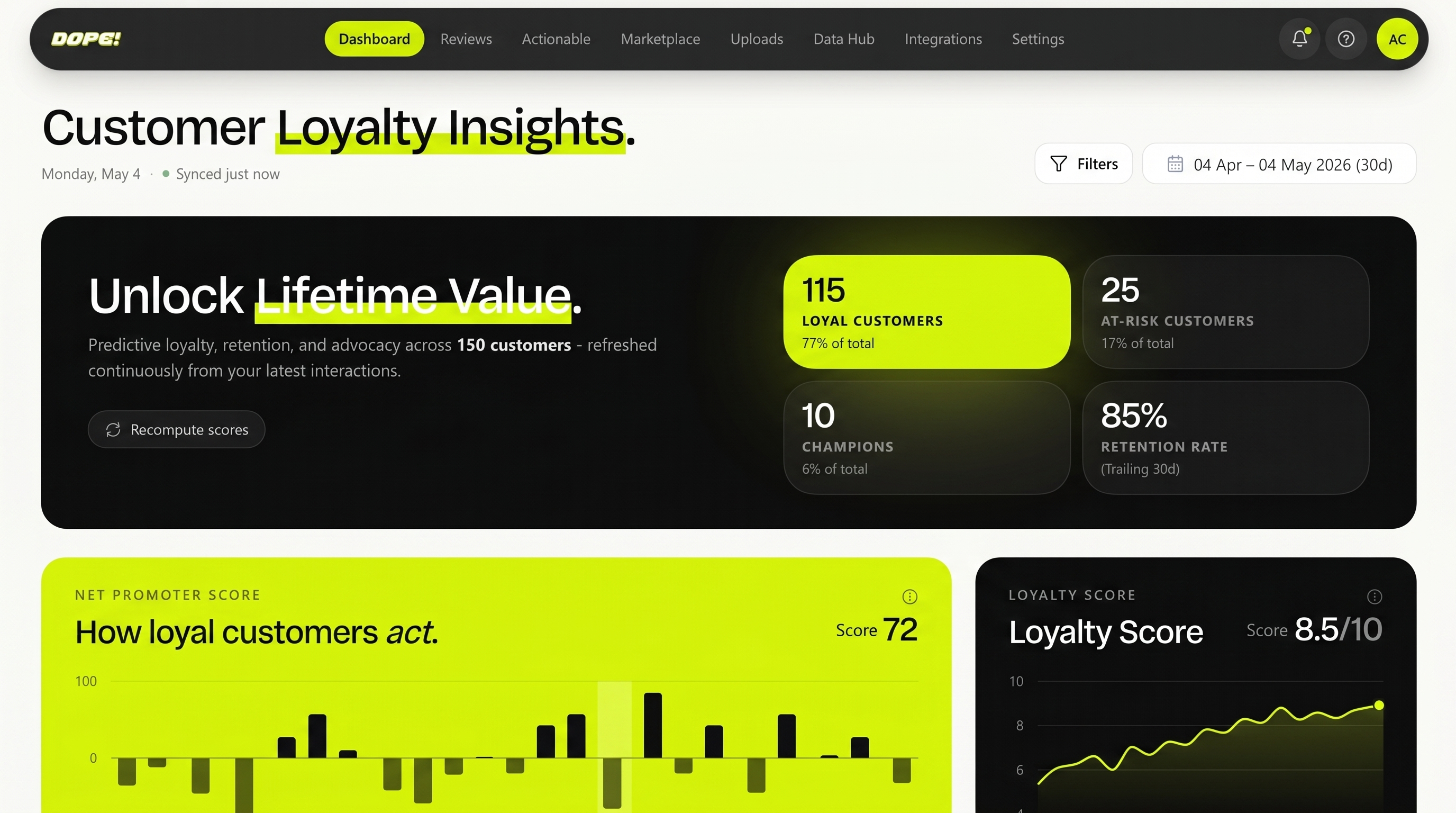
Net Promoter Score is one of the most powerful customer loyalty metrics available - and one of the most misunderstood. This guide covers exactly what NPS is, how it works, and how Indian D2C brands can use it practically to grow repeat revenue.
If you have ever filled out a survey that asked "On a scale of 0 to 10, how likely are you to recommend us to a friend or colleague?" - you have experienced NPS.
That single question, developed by Fred Reichheld in 2003, has become the most widely used customer loyalty metric in the world. Fortune 500 companies, fast-growing startups, and increasingly Indian D2C brands are tracking it every month.
But most Indian D2C brands that try to implement NPS make the same mistakes - they collect the score, celebrate or panic based on the number, and do nothing meaningful with what they learn.
This guide covers what NPS actually is, how to calculate it correctly, what a good score looks like for Indian D2C brands, and most importantly - how to use it to actually improve customer retention.
What Is NPS - The Simple Explanation
NPS stands for Net Promoter Score. It is a measure of customer loyalty - specifically, how likely your customers are to recommend your brand to someone they know.
The core question is always the same - "On a scale of 0 to 10, how likely are you to recommend us to a friend or family member?"
Based on their answer, customers fall into three categories -
Promoters score 9 or 10. These are your most loyal customers - the ones who actively recommend your brand, leave positive reviews, and are most likely to make repeat purchases. They are your growth engine.
Passives score 7 or 8. These customers are satisfied but not enthusiastic. They will not actively recommend you, but they will not actively speak negatively either. They are vulnerable to competitive offers.
Detractors score 0 to 6. These customers are unhappy. They are likely to churn, unlikely to repurchase, and in some cases will actively share negative experiences with others.
How to Calculate Your NPS
NPS is calculated by subtracting the percentage of Detractors from the percentage of Promoters.
NPS equals percentage of Promoters minus percentage of Detractors.
Passives are not included in the calculation - they count toward the total number of respondents but do not affect the score directly.
Example - if you collect 100 NPS responses and 55 are Promoters, 25 are Passives, and 20 are Detractors, your NPS is 55 minus 20 which equals 35.
NPS scores range from negative 100 to positive 100. Any score above 0 means you have more Promoters than Detractors. Any score above 50 is considered excellent. Any score above 70 is world class.
What Is a Good NPS for Indian D2C Brands
NPS benchmarks vary significantly by industry and market. For Indian D2C brands specifically, here is a realistic picture -
A score below 20 indicates significant customer experience problems that need immediate attention. Most customers in this range are not loyal and churn rates are typically high.
A score between 20 and 40 is average for Indian D2C. Most brands in this range have some loyal customers but significant room for improvement in retention.
A score between 40 and 60 is strong. Brands in this range are doing customer experience well and typically see above-average repeat purchase rates.
A score above 60 is excellent. Very few Indian D2C brands reach this consistently - those that do have built genuine customer loyalty that drives organic growth.
The most important thing about NPS is not where your score sits today - it is whether it is improving over time. A brand moving from 25 to 40 over six months is doing something right. A brand stuck at 45 for a year is missing opportunities.
Why NPS Alone Is Not Enough - The Follow-Up Question
The single biggest mistake brands make with NPS is treating the score as the output rather than the starting point.
The score tells you how many customers are loyal. It does not tell you why.
This is why the follow-up question is more valuable than the NPS score itself -
For Promoters - "What did we do that made you want to recommend us?"
For Passives - "What would have made your experience better?"
For Detractors - "What went wrong, and what can we do to make it right?"
The answers to these three questions are where your actual customer intelligence lives. A brand that knows their NPS is 38 has a number. A brand that knows their NPS is 38 and that 60 percent of Detractors mentioned delivery delays has an action plan.
How to Collect NPS for Indian D2C Brands - The Right Way
Most guides on NPS assume you are sending email surveys. For Indian D2C brands, this creates an immediate problem - email response rates in India sit at 3 to 8 percent for post-purchase communication.
An NPS score built on 5 percent of your customer base is not a reliable metric. It overrepresents your most engaged customers and completely misses the silent majority - who are, as a group, more likely to be Detractors or Passives than the customers who open every email.
The right collection approach for Indian D2C follows the same multi-channel logic that applies to all post-purchase feedback -
Call first - a personal call to the customer 5 to 7 days post delivery. Ask the NPS question verbally and note the score. Then ask the follow-up question immediately. Call-based NPS collection gives you the richest data because customers elaborate naturally in conversation.
WhatsApp if the call is not answered - send the NPS question as a WhatsApp message. The conversational format of WhatsApp encourages genuine responses. Ask the follow-up question based on their score.
Email if WhatsApp gets no reply - a simple email with just the NPS question and a reply option. Catches the segment that prefers email communication.
SMS as final attempt - a short message with the NPS question for customers who have not responded to any other channel.
This four-channel approach gives you an NPS score that reflects your entire customer base - not just the 5 percent who open emails.
How Often to Measure NPS
For Indian D2C brands, the right NPS cadence depends on order volume -
Under 100 orders per month - measure NPS quarterly. At low volumes, monthly measurement does not give you enough data to be statistically meaningful.
100 to 500 orders per month - measure NPS monthly. Enough volume to see meaningful trends and segment by product category or cohort.
Above 500 orders per month - measure NPS on a rolling basis - every customer gets the NPS question 5 to 7 days post delivery, continuously. Your NPS dashboard shows a 30-day rolling score that updates constantly.
The rolling approach is the most powerful because it shows you NPS trends in real time - you can see immediately if a change in packaging, a logistics partner switch, or a new product launch is affecting customer loyalty.
How to Use NPS to Actually Improve Retention
Tracking NPS is only valuable if it drives action. Here is how Indian D2C brands should act on NPS data specifically -
For Promoters - identify them and activate them. These are your best candidates for referral programs, user-generated content requests, and testimonials. A Promoter who is asked to share their experience will almost always say yes. Most brands never ask.
For Passives - treat them as Promoters in waiting. A Passive who gets a genuine follow-up, whose experience is acknowledged, and who sees a small improvement in their next order frequently becomes a Promoter. The conversion from Passive to Promoter is the highest-ROI retention activity available.
For Detractors - respond personally and fast. A Detractor who receives a genuine, fast response that acknowledges what went wrong and offers a real resolution retains at a significantly higher rate than one who hears nothing. Every Detractor is a retention opportunity, not a lost cause.
NPS vs CSAT vs CES - Which Metric Matters Most for D2C
Indian D2C brands often ask whether to track NPS, CSAT, or CES. Here is the honest breakdown -
NPS - Net Promoter Score - measures long-term loyalty and likelihood to recommend. Best for tracking overall brand health and retention over time. This is your primary metric.
CSAT - Customer Satisfaction Score - measures satisfaction with a specific interaction or experience. Best for tracking satisfaction immediately after delivery, after a customer service interaction, or after a specific product use. Complements NPS well.
CES - Customer Effort Score - measures how easy it was for a customer to do something. Best for ecommerce brands tracking friction in the purchase or return process.
For most Indian D2C brands at growth stage, starting with NPS as the primary metric and adding CSAT for post-delivery feedback is the right approach. CES becomes relevant when you are optimizing a complex purchase or support flow.
The NPS Mistake Most Indian D2C Brands Make
The most common NPS mistake is surveying too late.
Many brands send their NPS survey 30 days after purchase. By this point, the product experience is no longer fresh in the customer's memory. If there was a delivery issue, they have either resolved it mentally or already moved on to a competitor. The feedback you get at 30 days is retrospective - it tells you about an experience that ended a month ago.
The right timing for D2C NPS is 5 to 7 days post delivery - when the purchase experience is fresh, the product has been used enough to form an opinion, and there is still time to address any issues before the customer makes their next purchase decision.
Setting Up NPS Tracking - What You Actually Need
You do not need expensive software to start tracking NPS. Here is what you need at minimum -
A way to send the NPS question to customers 5 to 7 days post delivery - via call, WhatsApp, or email.
A simple spreadsheet to record scores and follow-up responses - customer name, order date, delivery date, NPS score, follow-up answer, category of feedback.
A monthly calculation of your NPS - total respondents, number of Promoters, number of Detractors, score.
A weekly review of Detractor responses - who needs follow-up this week, what issues are coming up repeatedly.
This manual setup works well up to 200 orders per month. Beyond that, automated collection and NLP-based analysis of follow-up responses become necessary to maintain quality and consistency.
Frequently Asked Questions
What is a good NPS score for a new D2C brand in India? For brands in their first year, any positive NPS score above 0 is a reasonable starting point. The goal in year one is establishing a baseline and understanding what is driving Detractor responses - not achieving a specific number.
How many responses do I need for NPS to be meaningful? At minimum 30 responses per measurement period for the score to be statistically reliable. Below 30, individual outliers can skew the score significantly. At 100 or more responses, you can begin segmenting by product category, acquisition channel, or customer cohort.
Should I show my NPS score publicly? Only if it is consistently strong - above 50. Sharing NPS publicly can build trust when the score is high. It creates risk when the score is average or below average.
Can NPS predict customer churn? Yes - Detractors churn at significantly higher rates than Promoters. Tracking which customers scored 0 to 6 and monitoring whether they place a second order within 60 days gives you a reliable churn prediction signal. Detractors who receive no follow-up churn at especially high rates.
How is NPS different from star ratings on Amazon or Google? Star ratings are public reviews left voluntarily by a self-selected group of customers - typically your most positive or most negative experiences. NPS is a structured metric collected systematically from a representative sample of your customer base. NPS is far more reliable as a business metric precisely because it is not self-selected.
DOPE by ScanMonk is India's fully outsourced customer intelligence platform for D2C brands - collecting feedback via calls, WhatsApp, email, and SMS, then delivering NLP-analyzed churn predictions and actionable insights including NPS tracking. Learn more at dope.scanmonk.com